


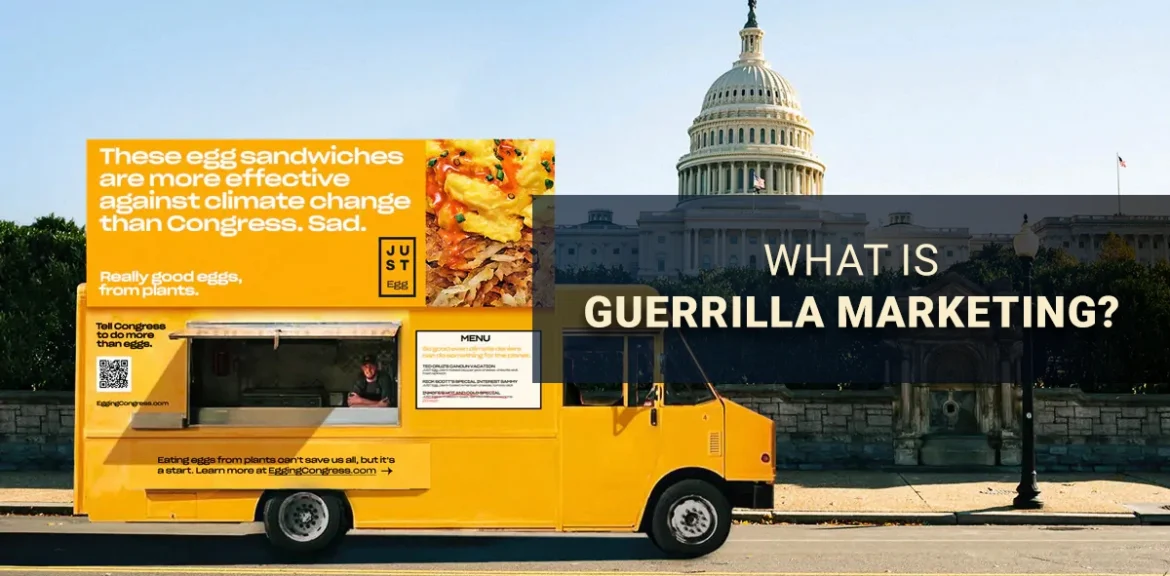
The traditional marketing methods fail to create lasting customer engagement because modern consumers see advertisements of what is guerrilla marketing all the time through digital platforms, physical locations, and social media. The challenge has driven brands to use unexpected methods which create surprise, maintain customer engagement and build brand recognition.
The method of Guerilla marketing enables businesses to achieve maximum advertising impact through low-cost advertising campaigns, which depend on creative strategies instead of their financial resources.
The blog presents a detailed explanation of guerrilla marketing, which describes its operational framework and main types, and provides real-world guerilla marketing examples while showing organizations the proper ways to use guerilla advertising in their contemporary marketing efforts.
See also: What Are the Best Marketing Strategies for Small Business?
What Is Guerrilla Marketing?
Guerrilla marketing uses surprising, creative methods which businesses implement through their unexpected outreach efforts to develop brand recognition among customers who encounter their marketing solutions. The marketing strategy of guerrilla marketing stands apart from traditional methods, which depend on multiple media exposures through paid advertising by using surprise elements together with emotional connections and viral content distribution.
The concept was introduced by Jay Conrad Levinson and draws inspiration from guerrilla warfare, using limited resources strategically to achieve maximum impact. In marketing, this translates to innovative campaigns that are designed to be noticed, talked about, and shared organically.
Guerrilla marketing involves:
- Small budget, great ideas
- Highly inventive and unconventional
- Victimizes client experience, not direct sales
An instrument to create noise among people and the media.
See also: Best Online Business in India for Young Indian Entrepreneurs
How Guerrilla Marketing Works?
The guerrilla marketing involves unforeseen outcomes due to the introduction of new elements in the normal consumer environments. The brands build marketing campaigns by using the public space, online space, and live events, creating unique experiences that consumers would be attracted to.
Guerrilla marketing campaigns can be effective as they rely on three key principles that include.
- Surprise Factor: The campaign will be found in the least expected place by the consumers in terms of its surprise factor.
- Emotional Response: The emotional response provokes curiosity, amusement, shock and admiration.
- Memorability: The experience will be in the memory of the audience even long after they are exposed to it at first.
- Shareability: The consumer spreads their experiences via social media and word-of-mouth due to the desire to share what they have had.
By proper implementation, guerrilla marketing will allow campaigns to gain natural expansion, one that goes beyond the target group.
Key Characteristics of Guerrilla Marketing
To gain a clearer insight into guerrilla advertising, it is necessary to identify the characteristics of such advertising:
- Innovative-based as opposed to costly-based.
- Context-aware, taking place or time as a strategic resource.
- Demographic-focused and audience-focused.
- Inconspicuous and can tend to merge with the environment.
- Very engaging, stimulating to participate in or discuss.
These qualities enable guerrilla marketing to be especially useful when the marketing of a brand aims at differentiation in the crowded markets.
Four Types of Guerrilla Marketing
The four main categories of guerrilla marketing each present marketers with their unique methods of implementation.
Ambient Guerrilla Marketing
The marketing messages of this type are displayed in unconventional locations which people encounter during their daily activities. The brands require constant physical presence in their surroundings.
Ambush Marketing
Ambush marketing practice allows brands to be associated with significant events through informal marketing activities. Despite the success of the method, its application requires careful evaluation of the legislation so that the rights to the trademarks and sponsorships are not violated.
Experiential Guerrilla Marketing
This method requires consumers to take part in live activities which create interactive experiences. The campaigns create emotional bonds with viewers while leaving them with lasting memories.
See also: Why Viral Content Is Important for a Successful Branding?
Viral Guerrilla Marketing
The digital platforms of viral campaigns allow their content to spread throughout the Internet. The initial execution may be small, but the content is intentionally designed for mass sharing online.
The different marketing categories enable brands to select guerrilla marketing strategies that match their business goals and acceptable risk levels.
Guerrilla Marketing Examples
It has helped brands across the globe to improve their brand visibility and customer relationship development.
- Nike used urban installations and spontaneous athlete performances to create its brand message, which shows performance and determination.
- Coca-Cola has developed experiential campaigns that use interactive vending machines to create public space giveaways of unexpected products.
- IKEA developed complete home display areas at public transport stops and city spaces to show customers how to use its products in their real-world environments.
These examples show that creative approaches combined with strategic placement methods can create major effects which do not need traditional advertising methods.
Guerilla Marketing in the Digital Age
Digital marketing uses guerrilla marketing, which employs unconventional online methods to generate customer interest and online engagement instead of achieving immediate sales results. The following techniques can be used:
- Unexpected social media campaigns
- Interactive content or challenges
- Clever use of memes or trending formats
- Influencer collaborations with non-traditional messaging
Digital guerrilla marketing practices prefer to measure audience interactions through shares, comments and brand mentions rather than through paid advertisement views.
Is Guerrilla Marketing Illegal?
It is not illegal, but some of the executions may be against the local laws, regulations or intellectual property rights. The risks of the law involved include:
- The trespass of a public or private property.
- False advertising statements.
- Infringement of trademarks or copyright.
- Public safety concerns
The guerilla advertising activities should be within the scope of legal and ethical requirements of the brands. It should start with approval attainment along with the execution of the risk evaluation.
See also: What are the Benefits of Viral Marketing?
Benefits of Guerilla Marketing
It provides multiple strategic benefits for businesses to use.
- It costs less for businesses to implement than standard marketing methods.
- The brand name stays in customers’ minds because of the advertising’s unique approach.
- The content achieves organic audience reach through social media platforms and news outlets.
- The content establishes a deep emotional bond with viewers.
- The approach allows businesses to stand out from their competitors in markets that have many similar products.
Startups, challenger brands, and companies that need new market positions find this marketing to be their most effective marketing strategy.
Best Practices for Effective Guerrilla Marketing
To achieve maximum success, organizations should implement the following best practices:
- Campaigns must align with the specific brand goals which they aim to achieve.
- The organization needs to comprehend how its audience behaves and which preferences they have.
- Creative work should take precedence because it establishes brand identity while keeping existing brand guidelines intact.
- Organizations must perform both legal assessments and safety assessments for their operations.
- The organization needs to develop a comprehensive strategy for increasing its digital presence through social media and public relations activities.
The organization needs to create marketing strategies which combine innovative elements with responsible execution.
Conclusion
Guerilla marketing serves as an effective substitute for conventional advertising methods through its creative approach that engages audiences through unexpected marketing strategies. The method produces outstanding results because it provides brand visibility with prolonged customer memory at a minimal expense when executed through proper planning and ethical practices.
Organizations that want to establish new audience connections should consider guerrilla marketing, which provides them with an effective method to interact with their target audiences in ways that create lasting impressions.
FAQ’s
It can be defined as the unorthodox online marketing strategies that concentrate on creativity, surprise and engagement instead of paid advertisement.
No, some of these tactics may be illegal when they are against the local laws, safety regulations, and intellectual property rights.
Ambient marketing, ambush marketing, experience marketing and viral marketing.
They could be interactive outdoor experiences, unexpected brand experiences, or digital viral campaigns of international brands.
Nike, Coca-Cola and IKEA are some of the brands that have managed to use guerrilla marketing techniques.