


India has experienced a major change to its digital commerce system during the last ten years, which has established new methods for a drop shipping business in India and its growth. The drop shipping business model in India has become a popular e-commerce solution because it operates without requiring physical assets while delivering efficient business operations.
Through its inventory management and warehousing elimination, dropshipping allows entrepreneurs to dedicate their time to product selection, marketing, and customer engagement activities.
The rising online consumer trust and better logistics capabilities make it essential for new online sellers to learn about the drop shipping business in India.
See also: Best Online Business in India for Young Indian Entrepreneurs
What Is Drop Shipping Business in India?
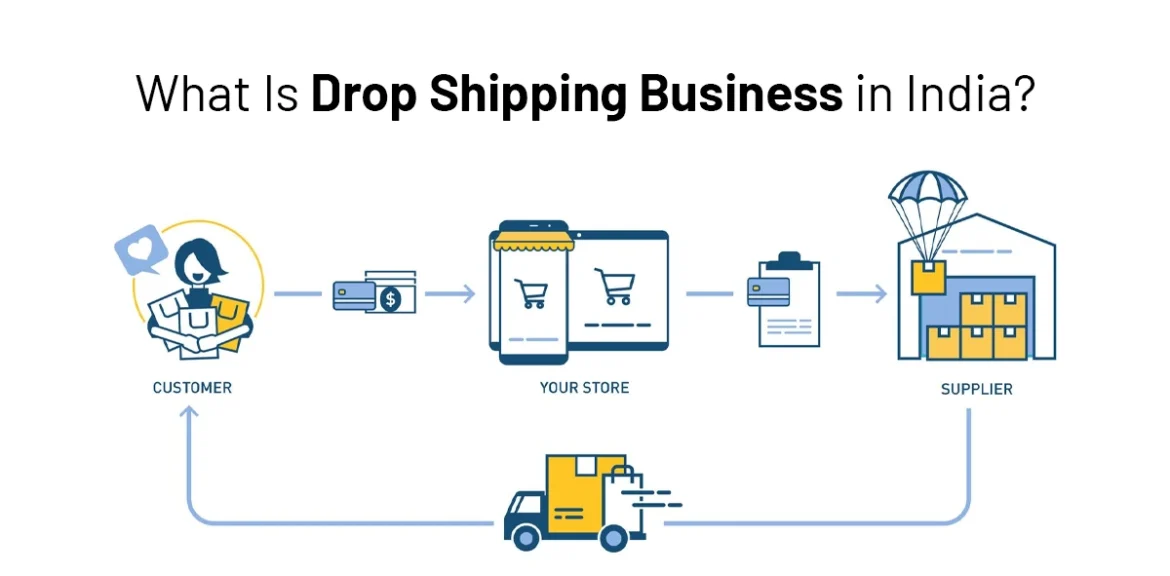
The drop shipping e-commerce model enables sellers to operate their business without maintaining inventory. The seller waits for customer orders to come in before he buys products from suppliers, who will then deliver the items to customers. The seller earns profit by applying a markup system over the cost price, which he receives from the supplier.
In India, drop shipping businesses operate by selling products through online platforms, which include personal websites, marketplaces and social media channels, while they obtain their products from suppliers based in India and other countries.
- The simple explanation of your work responsibilities states that you will market the product and handle all sales activities.
- The supplier handles all product storage requirements and product delivery service to customers.
- You handle all branding activities for the business, while you also set product prices and handle relationships with customers.
How Does a Drop Shipping Business in India Work?
A dropshipping business requires operational process knowledge for its sustainable growth. The approach to this business operation consists of multiple sequential stages, which begin with product selection.
Product Selection
The seller identifies products which have high demand, competitive prices and dependable supply sources. The product research stage requires fundamental information which the current process needs to deliver.
Supplier Partnership
The dropshipping supplier selection process requires choosing between Indian and international suppliers who provide products of high quality and timely delivery, and effective return procedures.
Online Store Setup
Sellers create their online stores by using platforms such as Shopify or WooCommerce or by making marketplace listings.
Customer Order Placement
A customer makes an order through the seller’s platform to pay for the retail price.
Order Fulfillment
The seller sends order details to the supplier after he buys products from them at wholesale pricing.
Direct Shipping
The supplier uses either neutral branding or seller branding to deliver the product to the customer.
Profit Margin
The seller earns profit from the difference between the retail price and the supplier cost.
The simplified structure of dropshipping makes it especially appealing to new business owners.
See also: Static vs Dynamic Websites: Which One is Right for Your Business?
Why Is Drop Shipping Business in India Gaining Popularity?
The growing popularity of dropshipping results from multiple factors, which include three specific reasons:
- The business requires less initial capital than regular retail stores.
- The business model does not require any inventory storage or warehouse facilities.
- The business model allows entrepreneurs to work from any location they choose.
- The system gives businesses access to product markets throughout the world.
- The Indian market experiences a fast expansion of both digital payment systems and logistics services.
The operational advantages of the drop shipping business in India make it an attractive business model for people who want to run their operations with minimal difficulty.
Drop Shipping Business Ideas for the Indian Market
The selection of a business niche will determine whether an individual achieves success or fails to do so. The following list presents drop shipping business concepts which target the Indian consumer markets:
Fashion and Apparel
Customers maintain a strong interest in the clothing industry because they continuously purchase its products and their associated accessories, footwear and jewellery.
Home and Kitchen Products
The Indian market demonstrates ongoing demand for storage solutions, cookware products and organiser items and decorative products.
Beauty and Personal Care
Online shoppers display a strong interest in buying skincare tools, grooming accessories and wellness products.
Electronics Accessories
The market demonstrates high demand for mobile covers and chargers, smart accessories, and peripherals because these items can be shipped easily.
Fitness and Lifestyle Products
The market for yoga mats and resistance bands, posture correctors and wellness accessories continues to grow.
The proposed dropshipping business concepts match the online shopping behaviour and purchasing patterns of Indian customers.
Legal Status of Drop Shipping Business in India
The common inquiry asks about the legal status of dropshipping operations.
In India, businesses can conduct dropshipping operations if they follow all applicable regulations, which include the following requirements:
- GST registration, which is required for all businesses that sell taxable products
- The business must follow all laws that safeguard consumer rights
- The business needs to establish return and refund processes which customers can easily understand
- All international suppliers must follow the established import rules
- The business must adhere to all trademark and intellectual property laws
The organization needs to follow all legal requirements, which will help it maintain operations and avoid legal consequences.
Is Dropshipping Profitable in India?
Multiple factors determine the profitability of dropshipping operations:
- Product selection and niche demand
- Supplier pricing and reliability
- Marketing efficiency
- Customer acquisition cost
- Operational discipline
The business will achieve greater profitability when the two systems reach their full growth capacity. Proper planning enables dropshipping to generate profits in India when the business focuses on selling value-based products and establishing a brand identity.
See also: How to Sell Products on Amazon India: Guide and Process
Risks Associated with a Drop Shipping Business in India
The dropshipping model brings benefits to businesses, yet it creates specific dangers that entrepreneurs need to handle with great care.
The major risks of this situation include:
- Supplier delays create problems because they disrupt delivery schedules.
- The system provides no means to control the standard of product creation.
- Business operators face intense competition when they enter frequently visited market segments.
- Business operators need to optimize their operations because their current situation results in extremely low profit margins.
- Customers experience dissatisfaction because their products arrive late.
The organization needs trustworthy suppliers who will help them establish proper delivery schedules, while their customer support team should remain fully operational.
Best Practices for Successful Drop Shipping Business in India
To establish a trustworthy and successful business operation, organizations must direct their efforts toward:
- The selection of suppliers who have been verified and maintain open policies.
- The provision of precise product information, together with its respective costs.
- The business must meet all requirements of Indian tax laws.
- The organization should allocate resources toward digital marketing efforts and search engine optimization.
- The organization should give first priority to improving customer experiences, together with post-sales assistance.
The level of professional conduct that an organization demonstrates will create higher levels of trust, which subsequently lead to increased conversion rates.
Conclusion: Drop Shipping Business in India
Entrepreneurs in India can start their e-commerce businesses through drop shipping because the business model needs only a basic investment for its flexible operation. Businesses in India need entrepreneurs to master drop shipping operations before they can select dropshipping ideas and build effective operational systems.
The sustainable and profitable operation of a drop shipping business in India needs companies to carry out specific processes, which require them to maintain operational discipline while meeting legal obligations and creating customer-centered business plans.
FAQ’s
You need to identify a profitable business method which requires you to start your business and obtain GST registration before establishing an online store through digital marketing efforts.
Yes, dropshipping can generate profits in India when businesses select appropriate products and control their marketing costs while working with trustworthy suppliers.
Yes, dropshipping is legal in India provided the business complies with GST laws, consumer protection regulations, and applicable import–export requirements.
The main hazards for the business stem from its supplier dependence, delivery time problems, product quality evaluation limitations, intense market competition, and customer service issues.
Businesses that produce lightweight products which customers frequently buy and return less tend to make dropshipping work for them because they sell fashion accessories, home essentials and electronics accessories.